


- January 26, 2026
- By: Anth
- No Comments
“Always Tired But Can’t Sit Still?” What You Should Know About Thyroid Goitres
“To think clearly, the heart must be at peace.”
Have you ever felt like your body is constantly on the move, even when your mind feels completely exhausted? One day, you feel hot and sweaty without reason, and the next, you’re lying awake at night unable to sleep. You’ve started losing weight even though your appetite has increased. Your heart races, your hands tremble, and you feel anxious for no clear reason. Despite being tired, you can’t seem to sit still or find rest. These could be more than just signs of stress or fatigue; they may point to a condition known as hyperthyroidism, caused by an overactive thyroid gland.
The thyroid is a small, butterfly-shaped gland located in the front of your neck. Though small in size, it plays a major role in regulating your body’s metabolism, energy use, heart rate, mood, and temperature. When the thyroid becomes overactive, it produces excessive hormones that cause the body’s systems to speed up. This condition, called hyperthyroidism, can result in a wide range of physical and emotional symptoms and, if left untreated, may lead to more serious health problems.
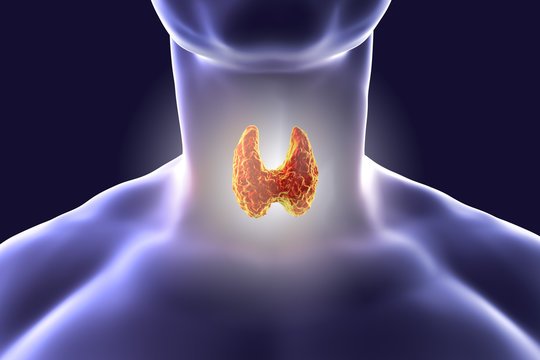
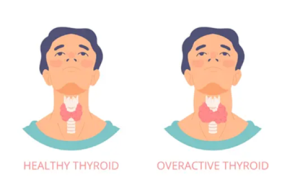
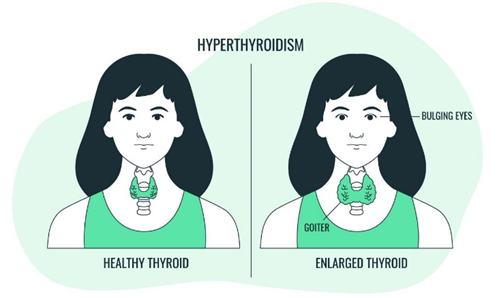
One visible sign of thyroid dysfunction is a goitre, which is an abnormal enlargement of the thyroid gland. This swelling can occur evenly across the gland or appear as one or more distinct lumps known as thyroid nodules. A goitre may or may not cause pain, but it is usually visible as a swelling at the base of the neck. It can be associated with both hyperthyroidism and hypothyroidism (an underactive thyroid), so it’s important to assess its cause through medical evaluation.
Hyperthyroidism presents a wide range of symptoms, and not everyone experiences them the same way. Common signs include a rapid or irregular heartbeat, shaking hands, frequent bowel movements, feeling hot and sweaty even in normal temperatures, and increased nervousness or restlessness. Many individuals also experience difficulty sleeping, muscle weakness, irregular or missed periods, and weight loss despite eating well. Some may also notice dry or bulging eyes, especially in cases of Graves’ disease, an autoimmune condition that causes the thyroid to overproduce hormones.
Several underlying causes can lead to hyperthyroidism. The most common is Graves’ disease, where the body’s immune system mistakenly attacks the thyroid, causing it to become overactive. Other causes include thyroid nodules that become independently overactive, excessive iodine intake from diet or medication, and thyroiditis, an inflMothertion of the thyroid that may occur after pregnancy or a viral illness.
Diagnosing hyperthyroidism is relatively straightforward. A blood test is typically the first step. Doctors will check the levels of TSH (thyroid-stimulating hormone), which is often low in hyperthyroidism, along with high levels of T3 and T4, the primary thyroid hormones. If autoimmune disease is suspected, an antibody test may be done to detect Graves’ disease. Additional imaging tests like thyroid ultrasound or a radioactive iodine uptake scan may be used to evaluate the structure and activity of the thyroid gland.
Treatment for hyperthyroidism depends on its cause and severity, but several effective options are available. Anti-thyroid medications, such as methimazole, are commonly prescribed to reduce hormone production. These are often the first line of treatment. Beta-blockers may be added to help manage symptoms like a fast heartbeat or shaking, though they don’t affect hormone levels. In some cases, radioactive iodine therapy is used to shrink the thyroid gland over time. This treatment is safe and commonly used around the world. For larger goitres or nodules causing pressure or difficulty swallowing, surgery may be necessary to remove part or all of the thyroid gland. After treatment, some individuals may develop an underactive thyroid (hypothyroidism), which can be managed with daily thyroid hormone replacement.
Hyperthyroidism is especially common in women aged 20 to 50 and may sometimes appear during or after pregnancy. However, men can also be affected, particularly if there’s a family history of thyroid disease. Because symptoms can be vague and appear gradually, many people ignore them or mistake them for stress, overwork, or aging.

Recognize illness before it becomes dangerous.
If you’re experiencing symptoms like rapid heartbeat, unexplained weight loss, tremors, anxiety, or a noticeable swelling in your neck, it’s important not to dismiss them. A simple blood test can help identify the issue. Early diagnosis can prevent complications and greatly improve quality of life.

At Mediplace, we provide accessible and compassionate care to anyone concerned about thyroid health. You can consult with experienced doctors, including Sinhala, Tamil, and English-speaking professionals, from the comfort of your home. Whether you’re based in Matara, Moneragala, or even abroad, Mediplace makes it easy to schedule appointments, arrange tests, and follow up on results. If you live overseas, you can also help coordinate care for your mother, sister, or family member living in Sri Lanka. We’ll guide them through the process gently and professionally, giving you peace of mind.
Living with hyperthyroidism doesn’t mean your life has to stop. With the right care, it’s manageable. But it starts with listening to your body, asking the right questions, and taking action.
You deserve peace, not panic. One test, one conversation, one step can change everything.

Don’t wait for obvious symptoms. Watch early.
Need to Speak with a Doctor?


📞 Let’s Talk
 Email: contact@mediplace.lk
 WhatsApp or Call: +94742022692
 Visit: mediplace.lk
